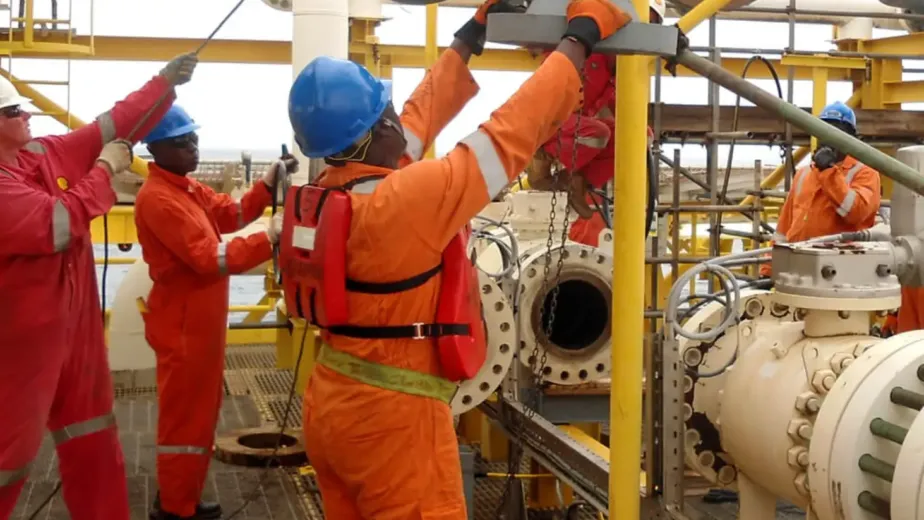



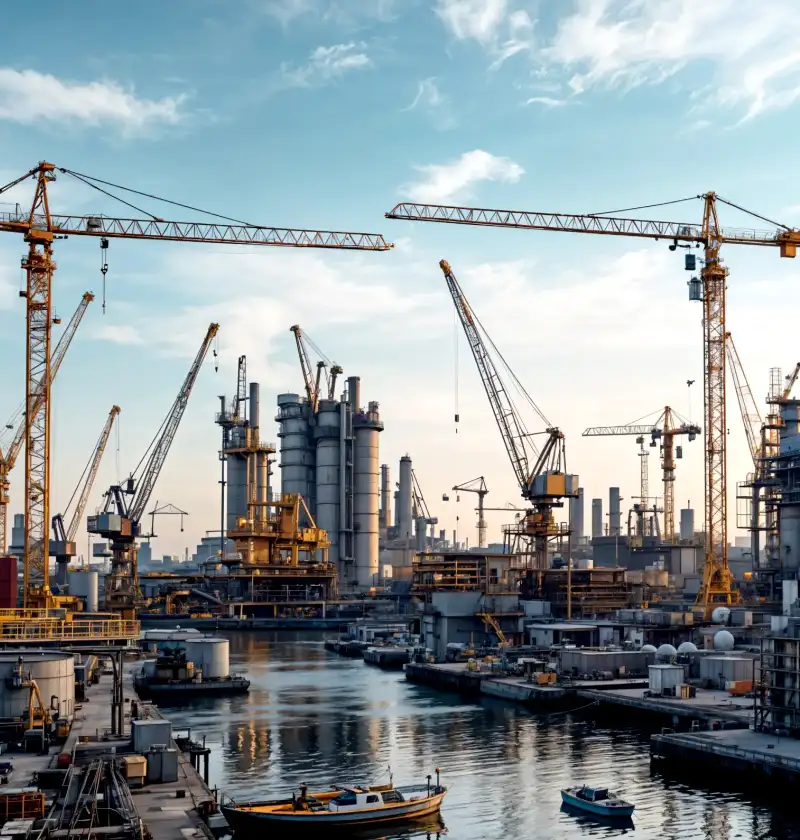

Sixty years ago Fujairah was a fishing town cut off from the rest of the UAE by the Hajar mountains, reachable only by a long coastal road. Today the same coastline holds one of the world’s largest oil storage complexes, and the mountains that once isolated the emirate now shelter it from the shipping chokepoints everyone else in the region has to worry about.
That shift did not happen by accident. It happened because Fujairah sits outside the Strait of Hormuz, because its port can store and blend crude and refined products at a scale few places can match, and because the emirate has spent three decades building the free zone infrastructure to support heavy industry. As that infrastructure has grown, so has the demand for the engineering, feasibility, and project management work that sits behind every tank expansion, refinery relocation, and terminal build. Summit Engineering is one of the leading oil and gas engineering consultancy firms operating out of Fujairah, and this piece looks at what is pulling engineering work eastward, and what that means if you are planning an industrial project on the UAE’s east coast.
We will cover the market numbers behind Fujairah’s growth, what an Project management consultancy company in the UAE actually does day to day, how ADNOC’s eastern strategy is reshaping demand, and what to look for if you are hiring Engineering and project management consultancy for your next project.
Why the UAE’s oil and gas engineering map is shifting east
For most of the UAE’s industrial history, Abu Dhabi held the engineering centre of gravity. Refineries, gas plants, and the consultancies that served them clustered around the capital and its offshore fields. Fujairah played a supporting role as a bunkering stop.
That balance has moved. ADNOC’s Habshan to Fujairah pipeline already lets crude reach the east coast without transiting the Strait of Hormuz, and recent years have added tank farm expansions, a relocated refinery project, and new LPG terminal work to the emirate’s project pipeline. Every one of those projects needs feasibility studies, FEED packages, and a project management consultancy in the UAE to keep design, procurement, and construction aligned. Engineering firms that can operate close to the port, the tank farms, and the free zone authorities have a real advantage over consultancies working remotely from Dubai or Abu Dhabi.
The Fujairah oil and gas market by the numbers
The scale of this shift shows up clearly in the data. The UAE oil and gas market is worth USD 14.94 billion in 2026 and is projected to reach USD 19.11 billion by 2031, a compound annual growth rate of 5.05 percent, according to Mordor Intelligence. Construction services already account for the largest share of that spending, which is where EPC, PMC, and engineering consultancy firms earn their fees.
Globally, the oil and gas PMC market was estimated at USD 478.66 billion in 2025 and is forecast to reach USD 603.95 billion by 2030, a 4.76 percent CAGR, per Mordor Intelligence. The Middle East’s share of that pipeline is anchored by mega projects such as ADNOC’s Hail and Ghasha sour gas development and the TA’ZIZ derivatives complex at Ruwais, both of which pull specialist engineering and construction management demand toward the UAE’s coastlines, Fujairah included.
| Market indicator | Figure | Source |
|---|---|---|
| UAE oil and gas market, 2026 | USD 14.94 billion | Mordor Intelligence |
| UAE oil and gas market, 2031 forecast | USD 19.11 billion (5.05% CAGR) | Mordor Intelligence |
| Global oil and gas PMC market, 2025 | USD 478.66 billion | Mordor Intelligence |
| Global oil and gas PMC market, 2030 forecast | USD 603.95 billion (4.76% CAGR) | Mordor Intelligence |
| Port of Fujairah oil storage capacity | Approximately 18 million cbm | Port of Fujairah |
| ADNOC capital plan, 2026 to 2030 | USD 150 billion earmarked | Mordor Intelligence |
What an PMC consultancy company in UAE does differently on the east coast
An PMC consultancy company in UAE is not the same thing as an PMC contractor. A contractor builds. A consultancy plans, coordinates, and protects the owner’s interests across engineering, procurement, and construction so the contractor’s work stays on budget, on schedule, and within spec.
On the east coast, that work carries an extra layer of complexity. Projects sit inside the Fujairah Oil Industry Zone or the Fujairah Free Zone, which means coordinating with port authorities, terminal operators, and free zone regulators alongside the usual client and contractor teams. Summit’s engineering team positions itself as the coordinating link between refineries, contractors, and ports, tracking FEED, design, and technical planning so every stakeholder is working from the same information.
Why the Port of Fujairah keeps pulling engineering work eastward
The Port of Fujairah holds close to 18 million cubic metres of oil storage capacity, up from 550,000 cubic metres in 1994, and ranks among the top three bunkering hubs in the world, according to the Port of Fujairah. That scale did not appear overnight. It came from three decades of tank farm expansions, terminal upgrades, and blending infrastructure, and every phase of that growth needed engineering and feasibility work behind it.
Fujairah’s position roughly 70 nautical miles outside the Strait of Hormuz is the other half of the story. It gives operators a route to move and store crude and refined products without passing through a chokepoint, which is exactly why ADNOC built the pipeline linking Habshan to Fujairah in the first place. For engineering consultants, that translates into steady demand for tank expansions, pipeline tie ins, and terminal upgrades that keep pace with the port’s growth.
Recent moves reinforce the trend. Fujairah Terminals, part of AD Ports Group, signed strategic land lease agreements with Fujairah International Airport, Fujairah Free Zone Authority, and a regional trading group to expand logistics and industrial capacity, according to Khaleej Times. Each of those agreements eventually becomes a construction or expansion project that needs feasibility, design, and project management support.
How ADNOC’s east coast strategy is reshaping demand for engineering consultants
ADNOC has earmarked USD 150 billion in capital spending for 2026 to 2030, with a strong emphasis on offshore gas monetisation and export infrastructure, per Mordor Intelligence. A meaningful share of that spending touches the east coast, either directly through terminal and pipeline work in Fujairah or indirectly through the export capacity that Fujairah’s storage and bunkering infrastructure supports.
That kind of capital programme does not move in a straight line from announcement to construction. Every project passes through environmental and project feasibility studies, technical feasibility reporting, and FEED before a single contractor is mobilised. Consultancies based in Fujairah, close to the terminals and the free zone authorities that issue approvals, are positioned to move through that early stage work faster than firms coordinating remotely.
Feasibility studies and FEED work behind Fujairah’s project pipeline
Feasibility work is where most industrial projects in Fujairah actually begin, long before construction crews arrive. A technical feasibility report for a factory or terminal has to answer whether the site, the process design, and the regulatory path actually work together, and a project bankability report has to satisfy the lender that the numbers hold up under stress.
Summit’s own project history reflects that pattern. The UAE LPG Terminal Development and Feasibility Study moved through pre feasibility and environmental assessment before any construction planning began, and the same discipline applies to industrial parks and factory sites weighing whether a Fujairah location makes commercial sense.
| Study type | Core question it answers | Typical stage |
|---|---|---|
| Pre feasibility study | Does the site and concept justify further investment? | Concept |
| Technical feasibility report | Can the process design and site conditions actually work? | Concept to FEED |
| Environmental and project feasibility assessment | What are the regulatory and environmental constraints? | Concept to FEED |
| Project bankability report | Will lenders finance the project as structured? | Pre financial close |
| FEED | What is the execution-ready design and cost basis? | Pre EPC award |
Fujairah Free Zone incentives that favour EPC and PMC firms
Fujairah Free Zone has operated since 1987 and now hosts roughly 2,000 companies across industrial, maritime, and logistics activities, with the Fujairah Oil Industry Zone as its energy focused core. The combination of 100 percent foreign ownership, full profit repatriation, and proximity to the port keeps drawing operators, and each new operator eventually needs engineering support to expand or upgrade its facilities.
The Etihad Rail network, which now links Fujairah to Abu Dhabi and the wider UAE rail corridor across roughly 900 kilometres, adds another layer of industrial logistics capacity, according to Khaleej Times. Better rail and port connectivity tends to bring more bulk cargo and industrial investment behind it, which keeps the pipeline of feasibility and construction work flowing for consultancies already established in the emirate.
| Free zone advantage | Why it matters for EPC and PMC firms |
|---|---|
| 100% foreign ownership | Lets international operators set up without a local partner requirement |
| Port of Fujairah adjacency | Cuts logistics lead time for tank, terminal, and pipeline projects |
| Fujairah Oil Industry Zone | Concentrates 15+ storage terminal operators in one coordinated zone |
| Etihad Rail connectivity | Expands industrial cargo capacity feeding new construction demand |
| Strait of Hormuz bypass | Positions Fujairah as the default expansion site for export resilience |
What top international PMC players are doing on the UAE east coast
Global players such as Bechtel, Saipem, and TechnipFMC continue to lead the largest PMC awards across the Middle East, drawn by the scale of upstream and LNG spending in the region. Their scope tends to sit at the very top of the market, mega train LNG facilities, offshore platforms, and multi billion dollar refinery packages that require balance sheets and fabrication capacity few regional firms can match.
Below that tier, the day to day feasibility, FEED, and project management work on mid sized east coast projects, tank expansions, terminal upgrades, refinery relocations, and factory feasibility studies, tends to go to consultancies with local presence and free zone familiarity. That is the space where a Fujairah based firm competes on responsiveness and regulatory knowledge rather than sheer scale.
Why Summit Engineering leads oil and gas engineering consultancy in Fujairah
Summit Engineering operates from Trade Building B, Suite 15, in the Fujairah Free Zone, inside the same industrial corridor as the terminals and refineries it supports. That proximity matters when a feasibility study needs a site visit, or a construction phase needs daily coordination with a port authority.
Summit’s service line covers the full project lifecycle: project management, environmental and project feasibility studies, engineering including FEED and process design, HSE and QA oversight, and construction management through to commissioning. That range lets a client stay with one accountable consultancy from concept study through to handover instead of re-briefing a new firm at every stage.
Inside Summit’s Fujairah project portfolio – current project
Fujairah is emerging as a critical energy and logistics hub, gaining increased global attention due to its strategic location outside the Strait of Hormuz and its role in strengthening the UAE’s trade and energy resilience. With billions being invested in infrastructure and terminal developments, the emirate is becoming a key destination for large-scale industrial projects. Summit’s involvement in Fujairah reflects this growing importance, with projects such as the NSE Terminal Fujairah 500,000 CBM tank expansion supporting the region’s expanding storage and energy infrastructure needs.
| Project | Type of work | Relevant Summit service |
|---|---|---|
| NSE Terminal Fujairah, 500,000 CBM tank expansion | Storage expansion | Project management, engineering |
What to look for in a project management consultancy in the UAE
Not every consultancy that lists PMC or EPCM on its website has actually run a project through the full cycle on the UAE’s east coast. A short checklist helps separate genuine capability from a general contracting background dressed up as consultancy.
- Proven feasibility and FEED experience specific to oil, gas, or industrial facilities, not only commercial construction
- A physical presence in or near the free zone where your project sits, not remote coordination from another emirate
- A documented HSE and QA policy that matches the process safety standards your project will be audited against
- References that show construction management through to commissioning, not just design sign off
- Clear separation between the consultancy’s role and the PMC contractor’s role, so accountability does not blur
| Service model | Who holds design risk | Who holds construction risk | Best fit for |
|---|---|---|---|
| EPC | Contractor | Contractor | Owners wanting single point delivery accountability |
| PMC | Owner, advised by consultant | Owner, advised by consultant | Owners wanting oversight without ceding control |
| EPCM | Consultant | Contractor(s), managed by consultant | Complex multi contractor sites needing coordination |
Process safety engineering and construction management on the east coast
Storage terminals, refineries, and gas plants carry process safety risks that a standard construction management approach does not fully cover. Hazard identification, layer of protection analysis, and safety instrumented system design all need to be built into the engineering phase, not bolted on afterward. Summit’s HSE and QA policy work runs alongside its engineering and construction execution teams so process safety requirements are tracked from FEED through to commissioning rather than discovered during a late stage audit.
Construction management in Fujairah’s industrial zones also means coordinating multiple specialist contractors on a live site, often close to operating storage tanks or an active terminal. Sequencing, permit to work systems, and contractor interface management carry more weight here than on a standalone commercial build.
What is changing next for engineering consultants in Fujairah
Two trends look set to shape demand over the next few years. First, ADNOC’s continued offshore gas monetisation push, backed by that USD 150 billion capital plan, will keep generating export and storage infrastructure work that touches the east coast, whether directly in Fujairah or through pipeline and terminal tie ins that feed it. Second, the free zone and port investments described earlier, including the Etihad Rail link and the land lease agreements signed by Fujairah Terminals, point toward broader industrial diversification beyond pure oil storage, which will bring new categories of feasibility and construction management work.
For consultancies already established in the emirate, that combination points to steady, varied demand rather than a single project type. For project owners, it means the advantage still sits with firms that know the free zone’s regulators, the port’s operating rhythm, and the specific process safety expectations of an active oil industry zone.
Final word
Fujairah’s rise did not happen because of one refinery or one pipeline. It happened because a small emirate outside the Strait of Hormuz kept building storage, kept building rail and port connections, and kept attracting the projects that follow that kind of infrastructure. Engineering consultancy grew alongside it, the same way it always does when a place stops being a stop on the map and becomes a destination on it. If you are weighing a feasibility study, a FEED package, or a full project management mandate on the UAE’s east coast, get in touch with Summit’s Fujairah team to talk through what your project needs.
Frequently asked questions
What is an PMC consultancy and how is it different from a contractor?
An PMC consultancy company in UAE plans, coordinates, and safeguards a project through engineering, procurement, and construction, while a contractor physically builds it. The consultancy protects the owner’s schedule, budget, and technical standards throughout the process.
Why is Fujairah becoming a hub for oil and gas engineering consultancy?
Fujairah sits outside the Strait of Hormuz, holds close to 18 million cubic metres of oil storage capacity, and continues to expand its free zone and port infrastructure. That growth generates steady feasibility, FEED, and construction management work for engineering consultants based in the emirate.
What services does an PMC consultancy company in the UAE typically provide?
Most firms cover project management, feasibility studies, engineering design including FEED, HSE and QA oversight, and construction management through to commissioning.
What is the difference between EPC, PMC and EPCM services?
EPC places design and construction risk with the contractor. PMC keeps the owner in control while a consultant advises. EPCM has the consultant manage multiple contractors without holding construction risk directly. The right model depends on how much control the owner wants to retain.
Why do oil and gas companies use project management consultancy in the UAE?
A PMC services UAE engagement gives an owner independent oversight of schedule, cost, and quality without handing full control to a single PMC contractor, which matters most on complex, multi contractor sites.
What makes Summit Engineering an oil and gas engineering consultancy in Fujairah?
Summit operates from the Fujairah Free Zone and covers the full project lifecycle from feasibility studies through engineering and construction, with a project portfolio built around Fujairah’s own tank, refinery, and terminal work.
What is FEED and why does it matter before construction starts?
FEED, or front end engineering design, turns a concept into an execution ready design and cost basis. Skipping or rushing FEED is one of the most common causes of cost overruns once construction begins.
How does an industrial feasibility study protect an investor’s capital?
An industrial feasibility study consultants UAE report tests whether the site, process design, and regulatory path work together before major capital is committed, which reduces the risk of costly redesigns later.
What is included in an environmental and project feasibility assessment?
It typically covers environmental impact, regulatory compliance, site suitability, and early cost and schedule estimates, giving both the owner and any lender a clear picture of project viability.
Why is Fujairah important to the UAE’s oil and gas supply chain?
Fujairah gives the UAE a route to store, blend, and export crude and refined products without passing through the Strait of Hormuz, which makes it a strategic node for supply chain resilience.
What role does the Port of Fujairah play in engineering project timelines?
Its storage and terminal capacity drives ongoing expansion and upgrade work, and its proximity to the free zone shortens the coordination loop between engineering teams, terminal operators, and regulators.
What should a technical feasibility report for a factory include?
A technical feasibility report for factories should cover process design validation, site conditions, utilities availability, and a realistic cost and schedule estimate before detailed design begins.
Why do lenders ask for a project bankability report before financing?
Project bankability reports UAE give lenders an independent view of technical, commercial, and regulatory risk, which underpins their confidence that the project can service its debt once operational.
What does process safety engineering cover in refinery projects?
Process safety engineering UAE work includes hazard identification, layer of protection analysis, and safety instrumented system design, all built into the engineering phase rather than added after construction.
How does construction management differ from construction execution?
Construction management services UAE oversee sequencing, contractor coordination, and quality assurance on the owner’s behalf, while execution is the physical work carried out by the contractor.
What does ADNOC approved engineering consultant status mean?
It signals that a consultancy has passed ADNOC’s vendor qualification process for technical capability, HSE standards, and financial stability, which is often a prerequisite for bidding on ADNOC linked projects.
What is refinery project management and when is it needed?
Refinery project management UAE covers coordinating engineering, procurement, and construction across a refinery build, relocation, or expansion, and is needed from the earliest feasibility stage through commissioning.
How do I choose the right engineering consultants in Fujairah?
Look for proven feasibility and FEED experience in oil and gas, a physical presence in the free zone, a documented HSE and QA policy, and references that extend through construction and commissioning, not just design.
What industries in Fujairah rely most on PMC project execution support?
Oil storage terminals, refineries, gas processing, and increasingly industrial and logistics facilities linked to the port and Etihad Rail network all rely on PMC project execution support UAE as they expand.
How do I hire a project management consultant for an oil and gas project in the UAE?
Start with a scoping conversation on your project’s stage, whether feasibility, FEED, or construction, then contact Summit’s Fujairah team to discuss scope, timeline, and the right service model for your project.